Admin
AdminIf you have ever caught that sharp rotten egg smell drifting through a room, you know it is hard to ignore. That odor usually points to a sewer gas problem, and it can turn any comfortable space into something you want to escape. Here is the thing, finding the exact source is not always simple. That is why tools like a sewer gas detector play such a helpful role. They guide you toward the real leak point instead of leaving you guessing.
What Sewer Gas Actually Is
People picture sewer gas as one single substance, but it is really a blend of different gases that collect in plumbing systems. Hydrogen sulfide creates the classic rotten egg smell, methane brings a flammable risk, and ammonia adds irritation. When everything in the plumbing system works as it should, these gases stay contained. A problem only appears when something breaks the seal, cracks, dries out, or shifts enough to let that mixture drift into your living space.
What this really means is that a strange odor is not just annoying, it is a signal that pressure, moisture balance, or airflow in the plumbing system has changed. That shift might be tiny, but once gases get a pathway, they move freely.
Common Places Where Sewer Gas Slips Out
Leaks tend to show up in the same problem spots over and over. Once you know these areas, you understand why a sewer gas detector becomes so useful when you are trying to narrow down the source.
Dry floor drains. A floor drain that has not been used in a while can lose its water barrier. Without that water sitting at the bottom, gas rises straight through the opening.
Worn wax rings under toilets. A toilet that rocks even slightly can break the seal under it. That seal is what keeps sewer gas out of the bathroom, so once it fails, odor escapes fast.
Cracked vent pipes. These pipes normally carry sewer gas up and out of the house. A crack in a wall or attic section sends gas into the rooms instead.
Loose cleanout caps. If a cleanout plug is not fully tightened, gas finds the gap and pushes its way out.
Damaged or old traps. Every sink and drain has a trap that holds water. When that trap develops a leak or wears out, the water level drops and the barrier disappears.
Each of these spots can produce similar odors, so walking around and taking guesses rarely works. This is where detection tools come into play.
How a Sewer Gas Detector Helps You Pinpoint the Source
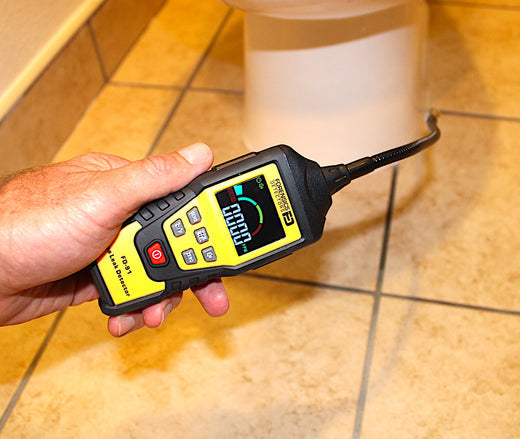
Most people notice only the smell, not the exact location. A sewer gas detector changes the entire approach. Instead of chasing the odor, you follow the readings. As you move the detector near drains, toilets, walls, or pipes, you see the gas concentration shift. The higher the reading, the closer you are to the entry point.
Let’s break it down into a simple pattern.
- You turn on the detector and let it stabilize.
- You walk room by room, holding it near common leak spots.
- The detector responds to pockets of gas, showing you where the concentration spikes.
- You use those spikes to find the most likely escape point.
This method cuts out guesswork. It helps you separate a harmless lingering smell from an actual leak that needs attention.
Why Sewer Gas Should Never Be Ignored
Sewer gas is more than an unpleasant odor. Hydrogen sulfide can cause headaches and dizziness, methane raises the risk of flammability, and ammonia can irritate your throat and eyes. Over time, constant exposure becomes a health issue.
Beyond that, any gas leak points to a deeper problem in the plumbing structure. Letting it sit means the damage continues. What starts as a simple dry trap could turn into something larger, like a hidden crack behind a wall.
The keyword here is timing. The sooner you find the leak, the easier the repair.
Simple Fixes Once You Find the Leak Point
A sewer gas detector gets you to the right spot, but then you need to handle the repair. Most solutions fall into pretty manageable steps.
Refill dry traps. Pour water down floor drains or seldom used sinks. A cup of mineral oil helps slow evaporation in drains that stay dry for long periods.
Replace wax rings. If the toilet wobbles, a fresh wax ring usually restores the seal. It is a straightforward job if you are comfortable removing the toilet.
Seal cleanout caps. Tighten the plug or replace it if the threads are worn.
Repair cracks in vent pipes. This might require cutting drywall, but once exposed, a plumber can replace the damaged section.
Tighten loose connections. If the detector shows spikes near pipe joints, tightening the fittings or adding new plumber’s tape might be all you need.
The key is precision. When you know the exact escape point, the fix becomes a targeted repair instead of a time consuming search.
Keeping Sewer Gas Out for Good
Once you repair the leak, a little routine maintenance goes a long way. Run water through all drains from time to time, check toilets for movement, and keep an eye on any place where moisture evaporates quickly. A detector stays helpful even after the repair because you can use it again anytime you suspect something is off.
And here is the fun part, after you finally track down that stubborn odor and quiet it for good, your home feels normal again, almost as if nothing ever happened, except this time you know exactly what to do if the air tries to tell a story again.